UI / UX Design
Tribal
A new solution to promote eco-tourism in Middle Eastern countries.
 IDA Design Awards
 C²A Creative Communication Awards '25
 D'24 Best of Best
 Design Intelligence Awards
 International Architecture & Design Awards
 UX Design Awards
#Artificial Intelligence#UX Research#Eco Tourism#App Design
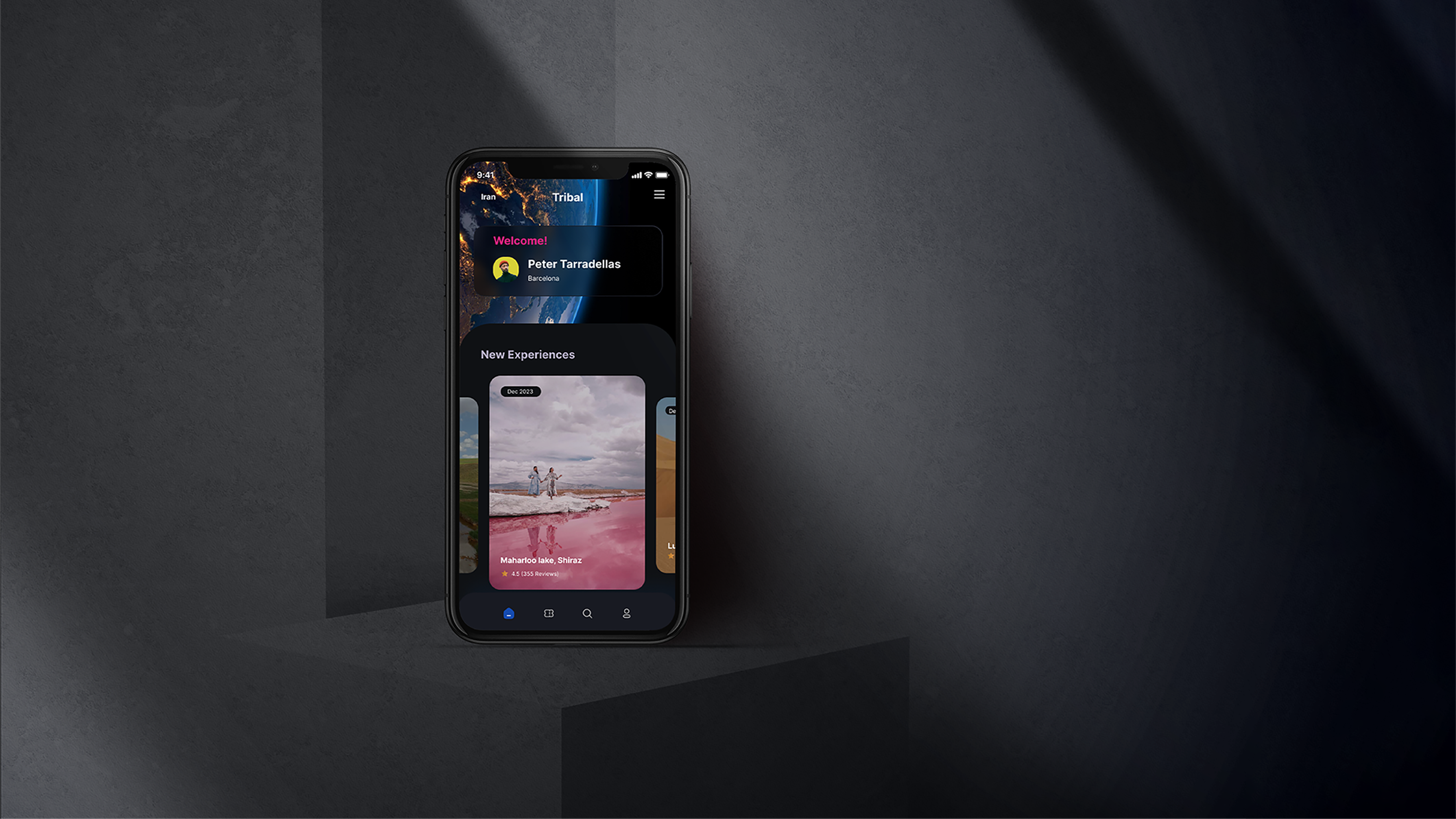
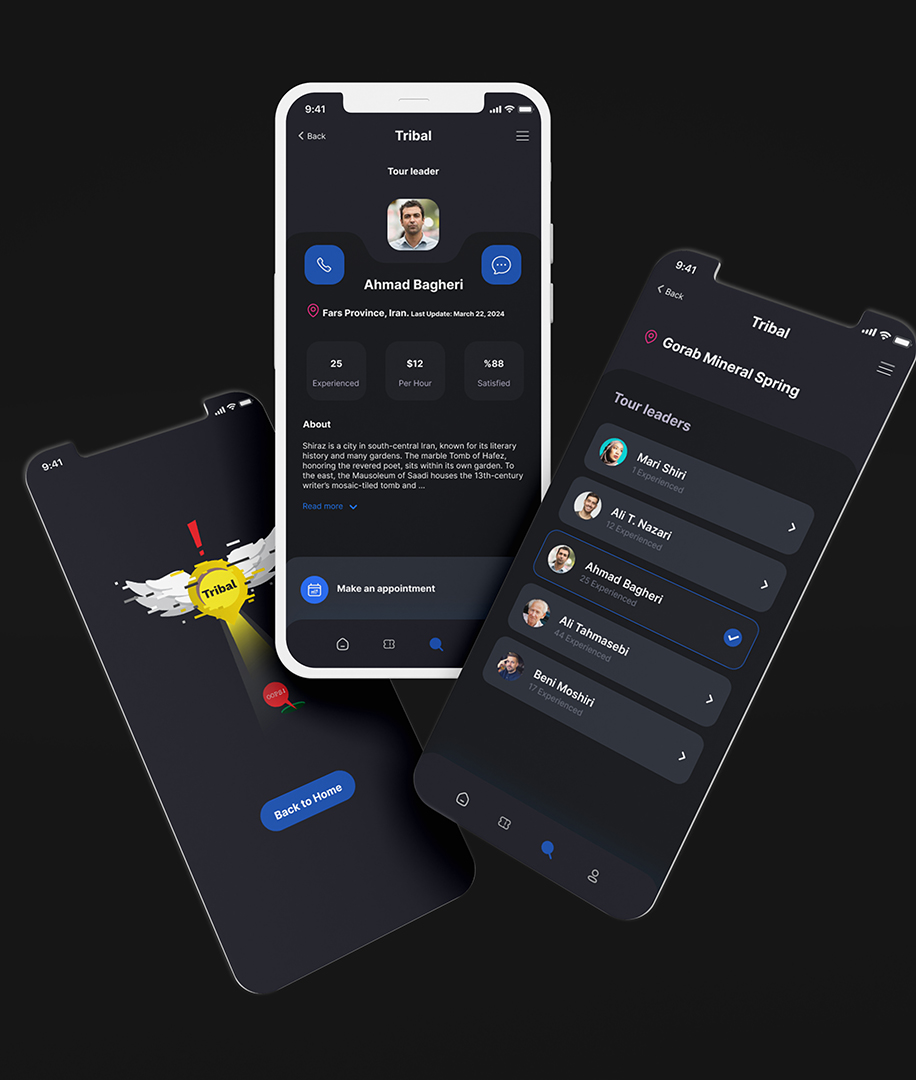
Introduction
Traveling to Middle Eastern countries, particularly Iran, often presents unexpected challenges due to limited access to reliable local resources. This lack of accessible information can make decision-making difficult, potentially leading to considerable time and financial losses.
The app’s core objective is to empower the local workforce, particularly in small towns and villages, by facilitating international connections and creating local job opportunities.
The app’s core objective is to empower the local workforce, particularly in small towns and villages, by facilitating international connections and creating local job opportunities.
ProductApplication
What I didLogo design
User research & testing
UI Design
UX Design
User research & testing
UI Design
UX Design
My RoleUX Researcher, UI/UX designer
ToolsFigma, Figma jam, Adobe Photoshop, Adobe Illustrator
TimelineQ4 2022 - Q4 2024
Problem
The lack of decent work opportunities and economic investment in many Middle Eastern countries, particularly in small towns and rural areas, has contributed to economic stagnation and social challenges, leading to migration away from these regions. This project aims to address these issues by promoting eco-tourism as a sustainable solution. The proposed app focuses on creating job opportunities within local communities by encouraging environmentally friendly and culturally immersive tourism.
By connecting tourists with local guides, preserving ecosystems, and showcasing cultural heritage, the app fosters economic growth and social integration, empowering local populations and supporting reverse migration.
Our Principle
This project began with a focus on one of the United Nations' key goals: Decent work and economic growth. According to the UN, "Decent work means opportunities for everyone to engage in productive work that provides a fair income, workplace security, and social protection for families, along with better prospects for personal development and social integration." A continued lack of decent work opportunities, insufficient investment, and under-consumption lead to the erosion of the fundamental social contract that underpins democratic societies: the idea that everyone should benefit from progress.
Our Criteria
Design Process
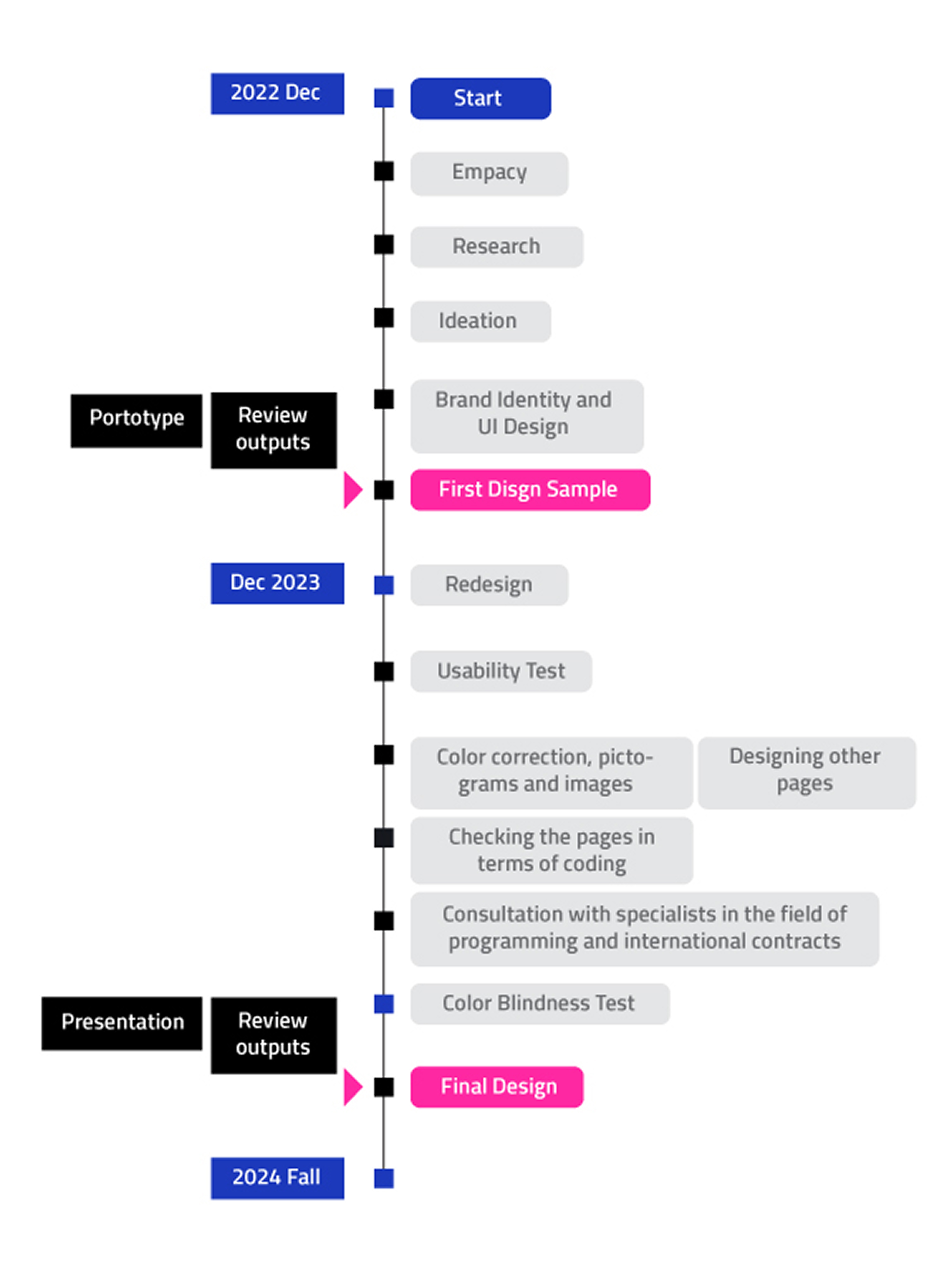
The design process for this project consists of three main phases, moving from left to right: Understand, Explore, and Build. Each of these phases is divided into two sub-phases, which gradually guide the design toward its completion and final outcome.
This process is iterative, meaning that to achieve a satisfactory result and create a product that aligns as closely as possible with user needs, revisiting earlier stages and re-evaluating the design is inevitable. This approach not only allows for continuous improvement but also enables the identification and optimization of weaknesses, ensuring the final product meets user expectations and requirements.
This process is iterative, meaning that to achieve a satisfactory result and create a product that aligns as closely as possible with user needs, revisiting earlier stages and re-evaluating the design is inevitable. This approach not only allows for continuous improvement but also enables the identification and optimization of weaknesses, ensuring the final product meets user expectations and requirements.
This model is derived from the Double Diamond framework, which consolidates these six stages into four key phases: Discover, Define, Develop, and Deliver.
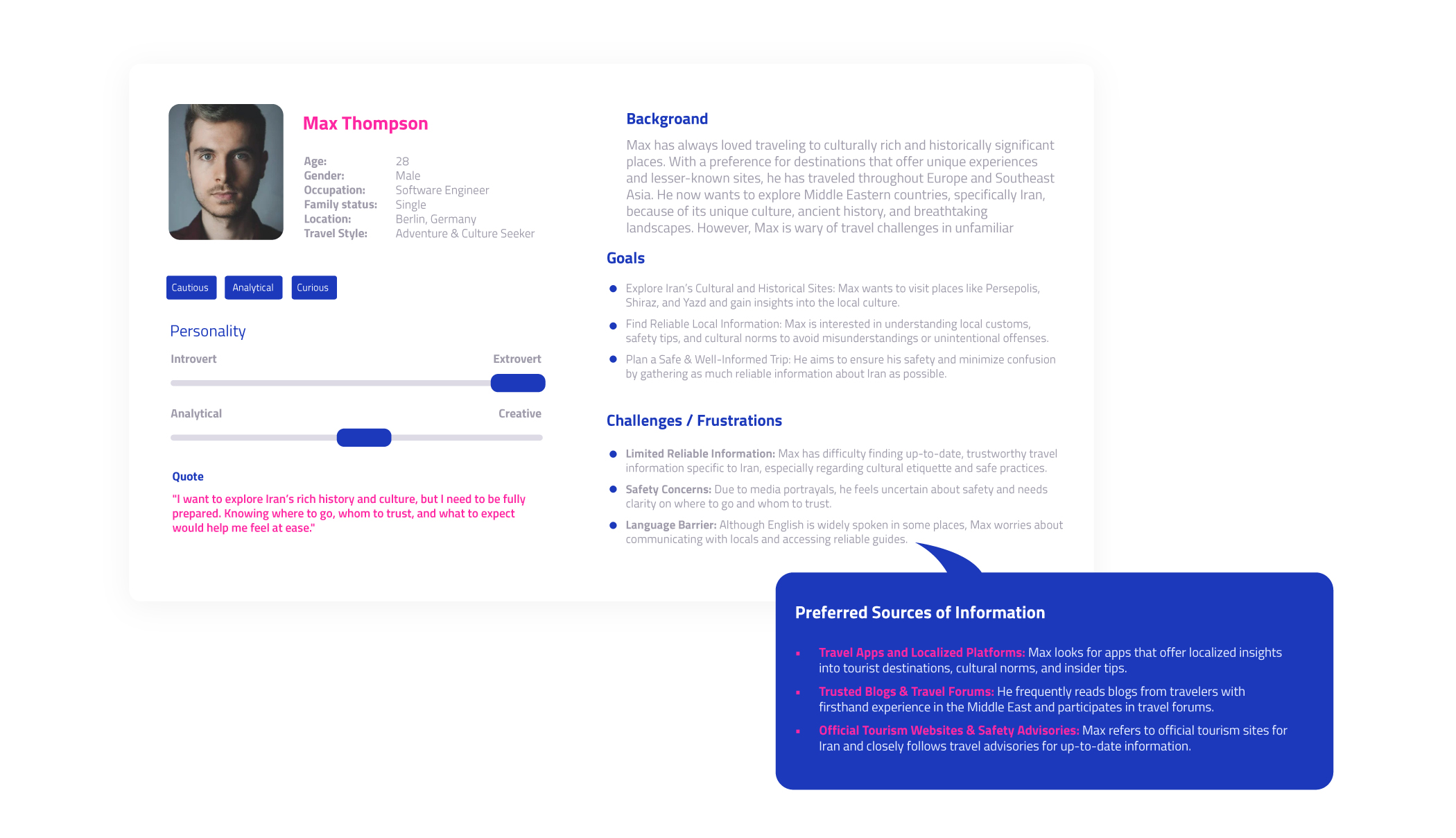
Persona
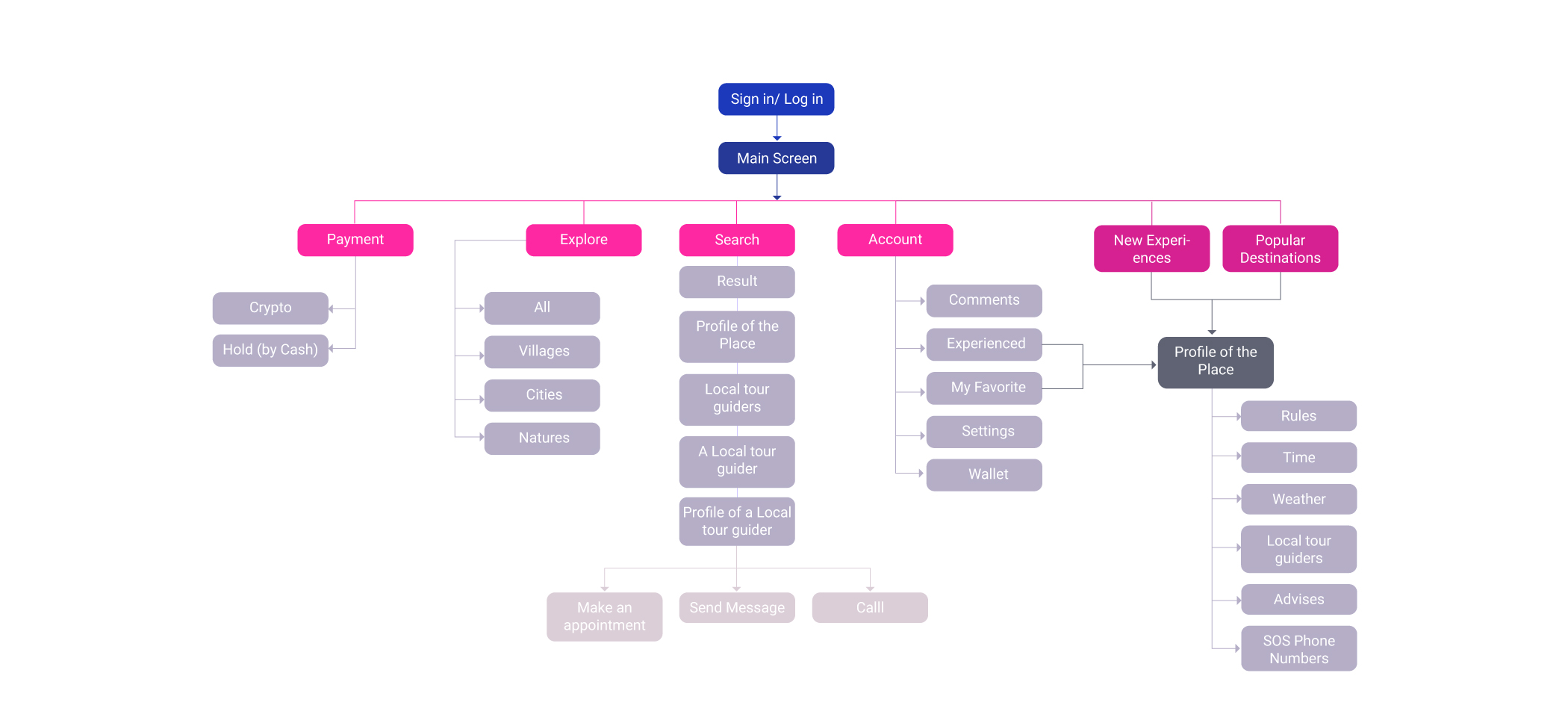
User Flow
Brand Identity
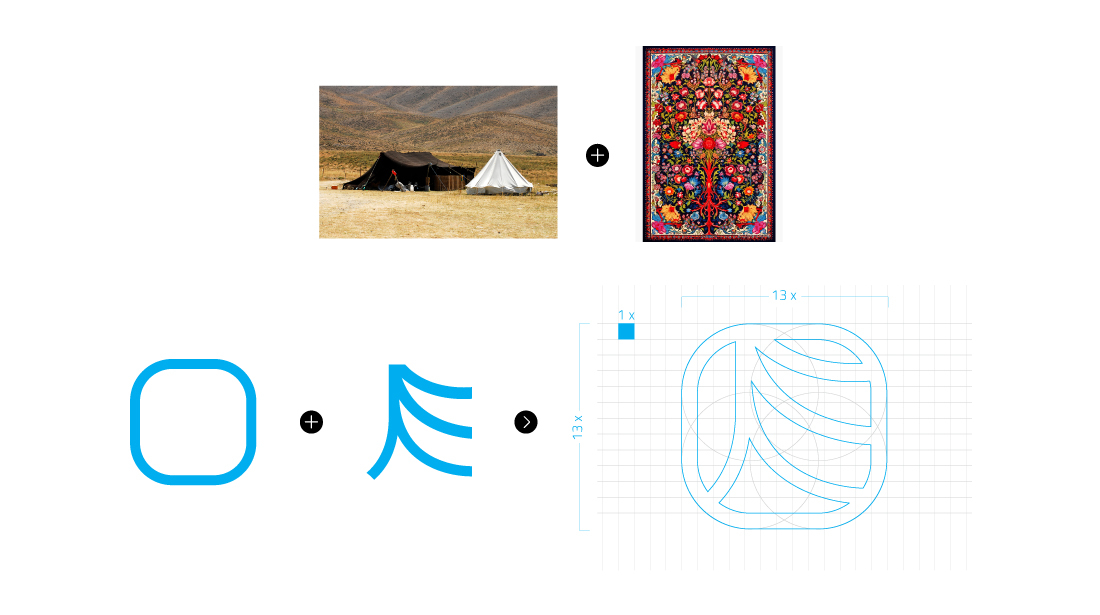
Logo: Structure & Idea
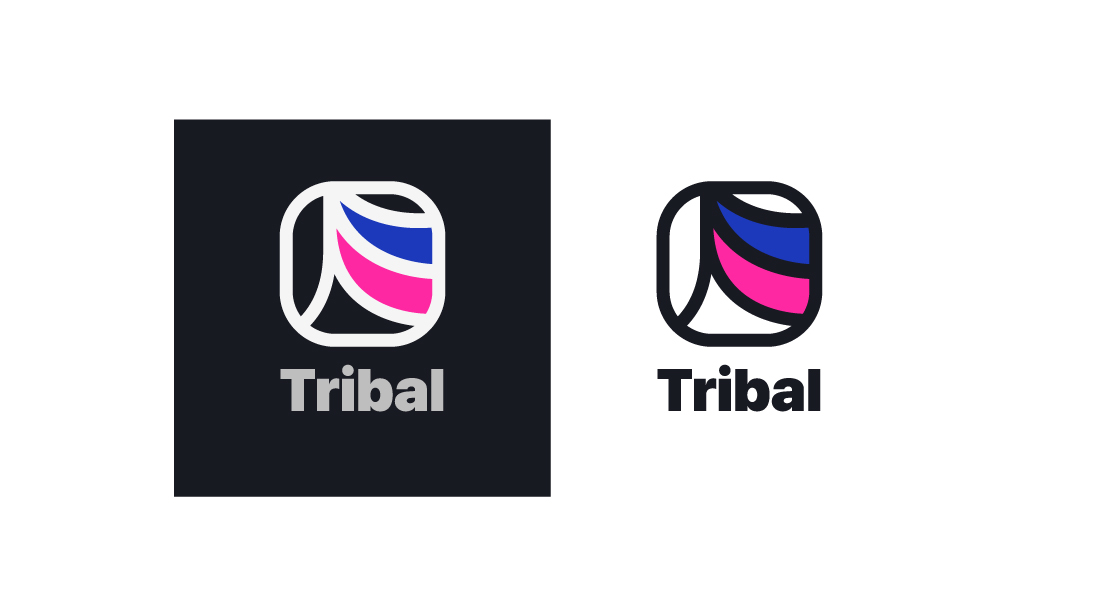
Iranian designs are rich with curved lines and shapes, often abstracted from nature, especially flowers. This logo, inspired by traditional carpet patterns, has been created in a minimalist style. It represents a sprout enclosed within a square frame, resembling a tile.
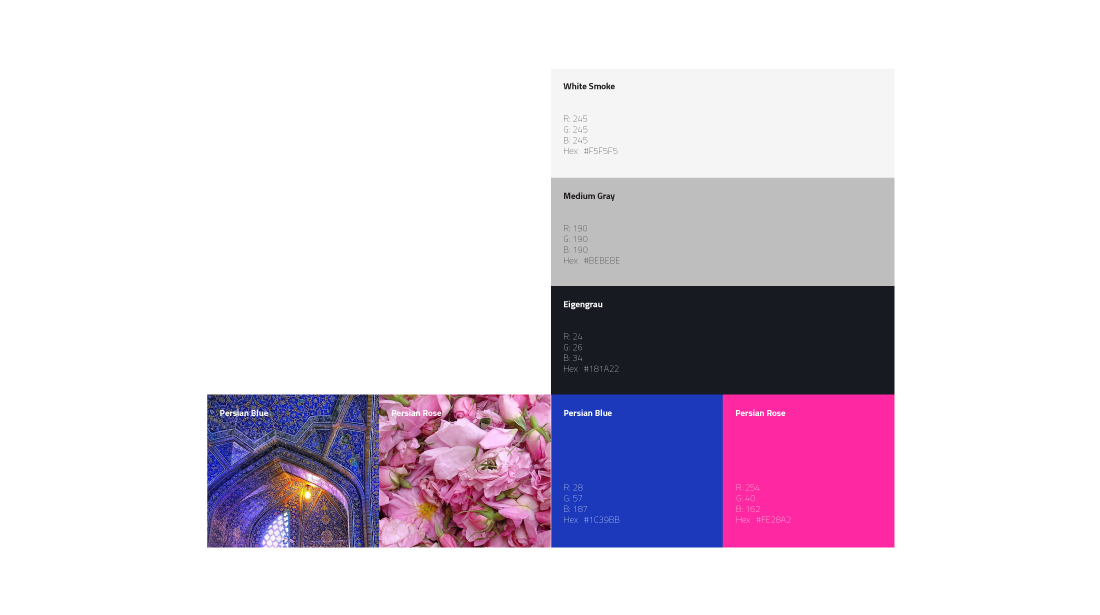
Logo: Color
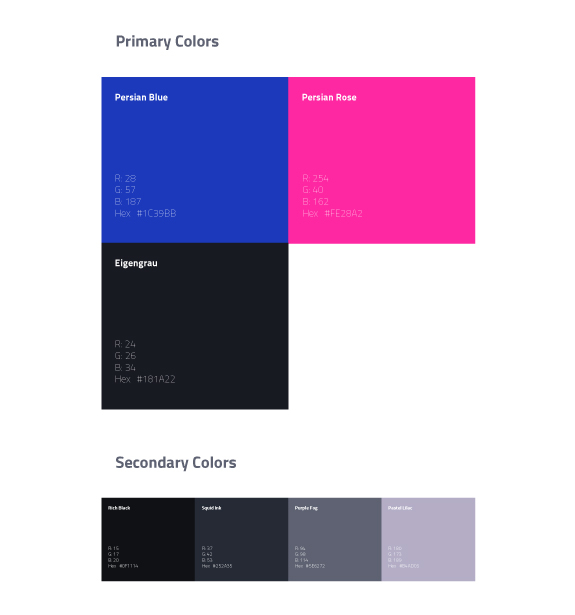
The logo design features two traditional Iranian colors: Persian Red, inspired by the Iranian rose, and Persian Blue, drawn from the tilework of Iranian mosques. Three shades of gray are used for the typography and surrounding elements to maintain a neutral tone, enhancing the clarity and focus on the form.
Application
Redesign
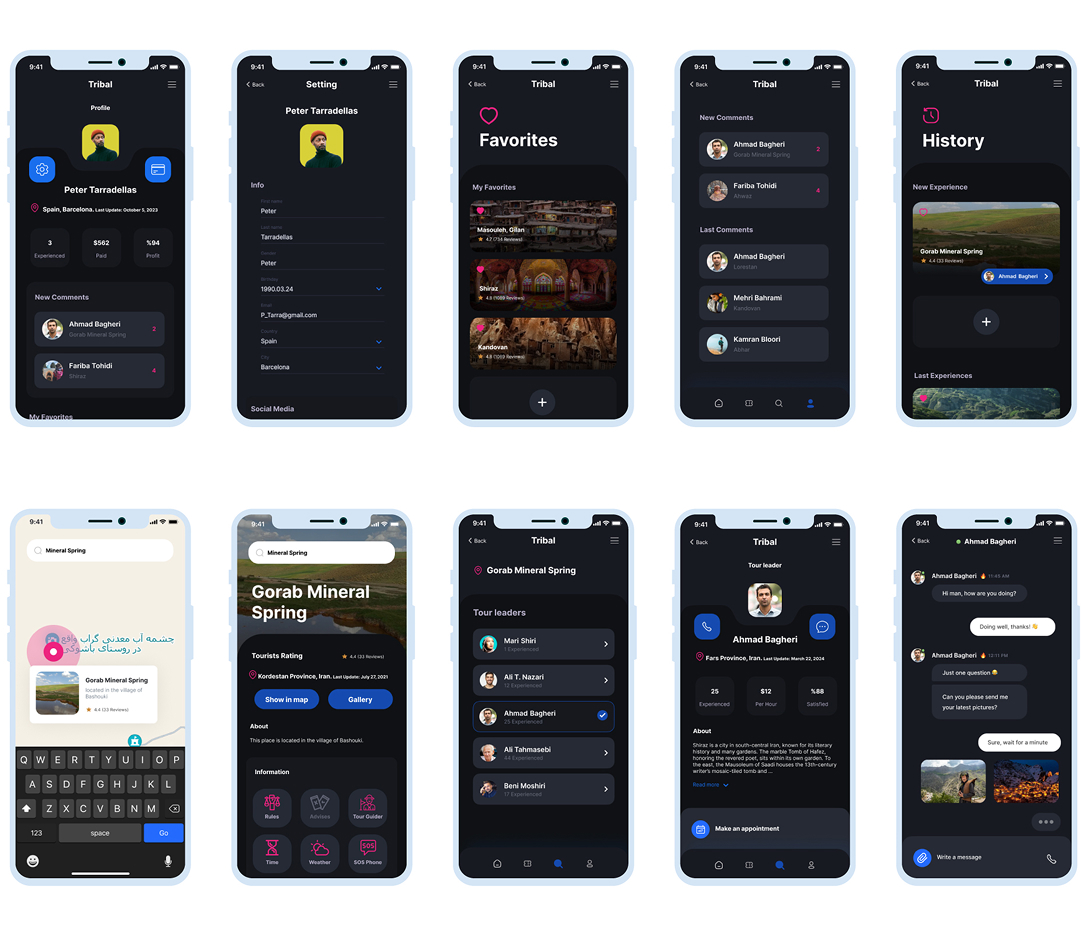
Initially, a comprehensive usability test was conducted to thoroughly evaluate the user experience. At the same time, all pages were meticulously examined for accessibility and potential coding issues that might arise in the future.
The color codes were optimized to enhance clarity and ensure design consistency, while static images on the pages were replaced with new visuals that align with the design objectives.
The color codes were optimized to enhance clarity and ensure design consistency, while static images on the pages were replaced with new visuals that align with the design objectives.
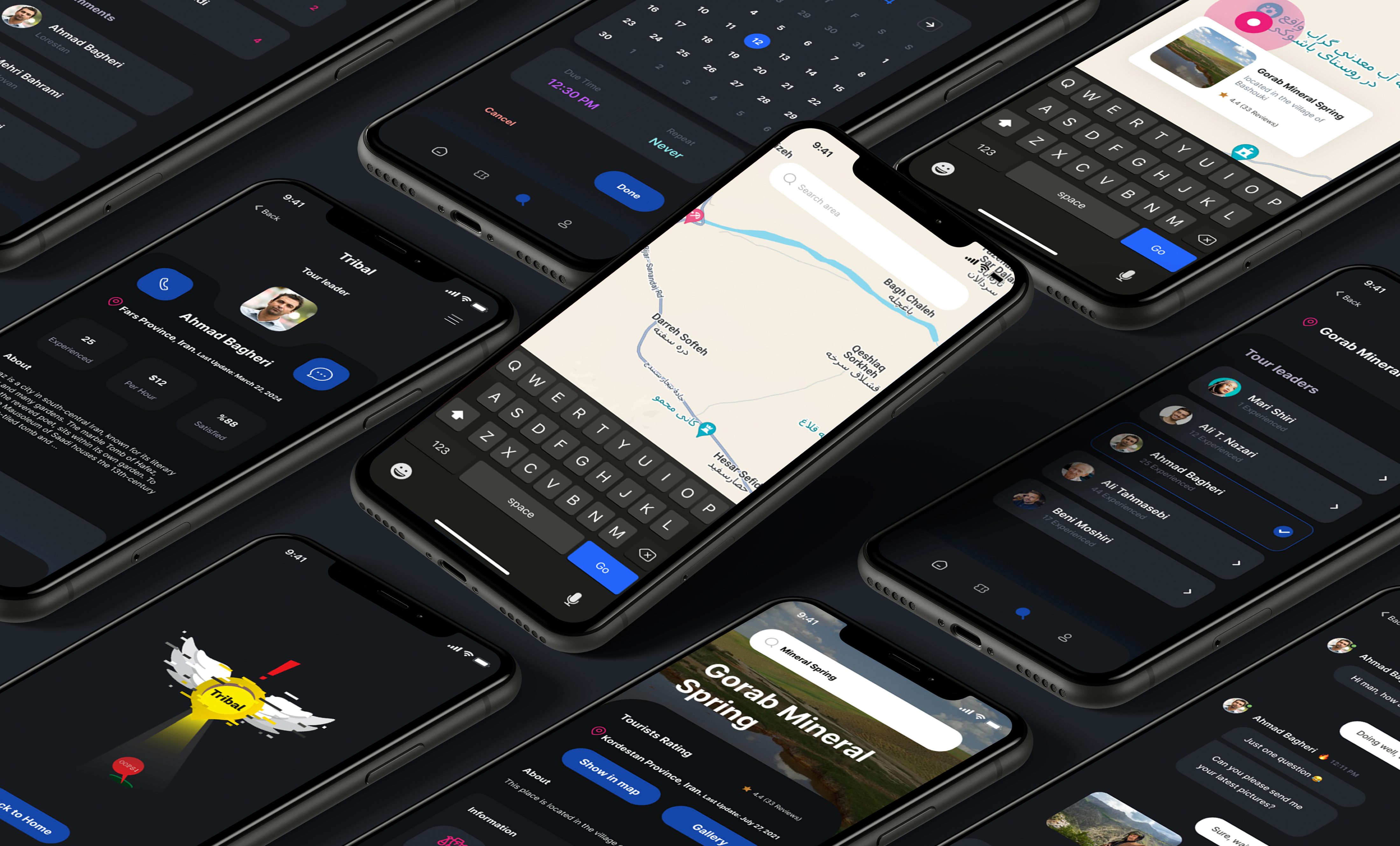
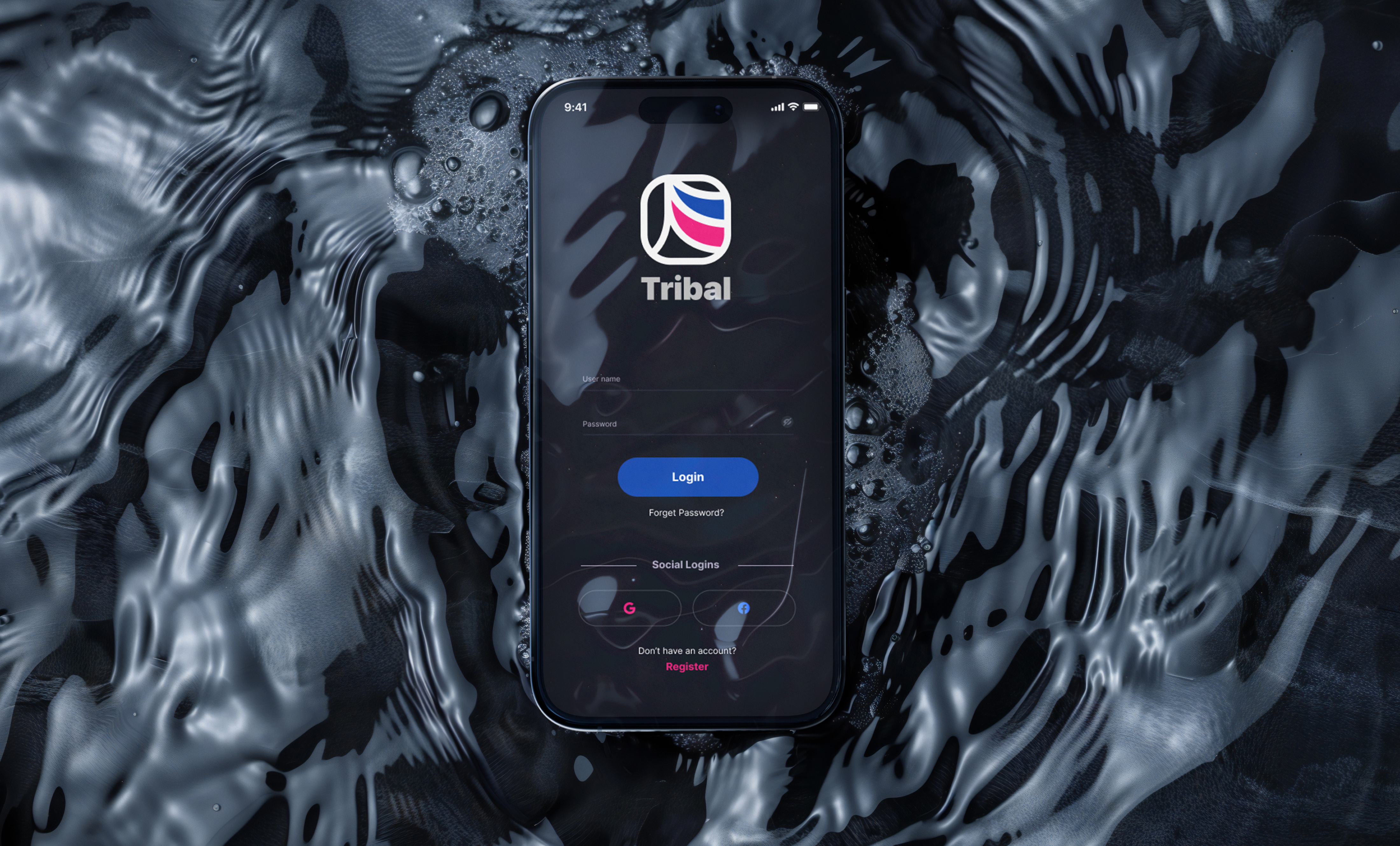
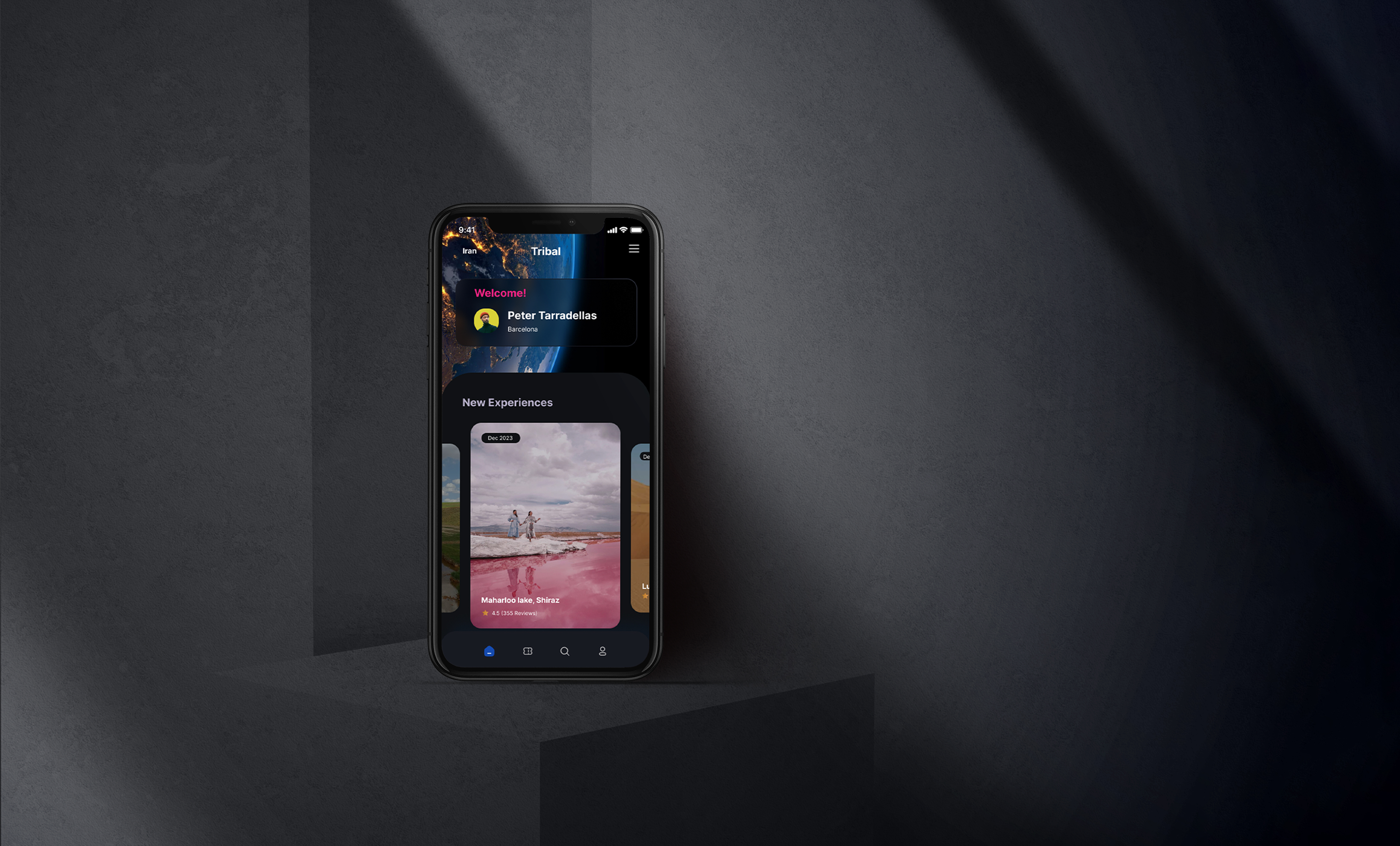
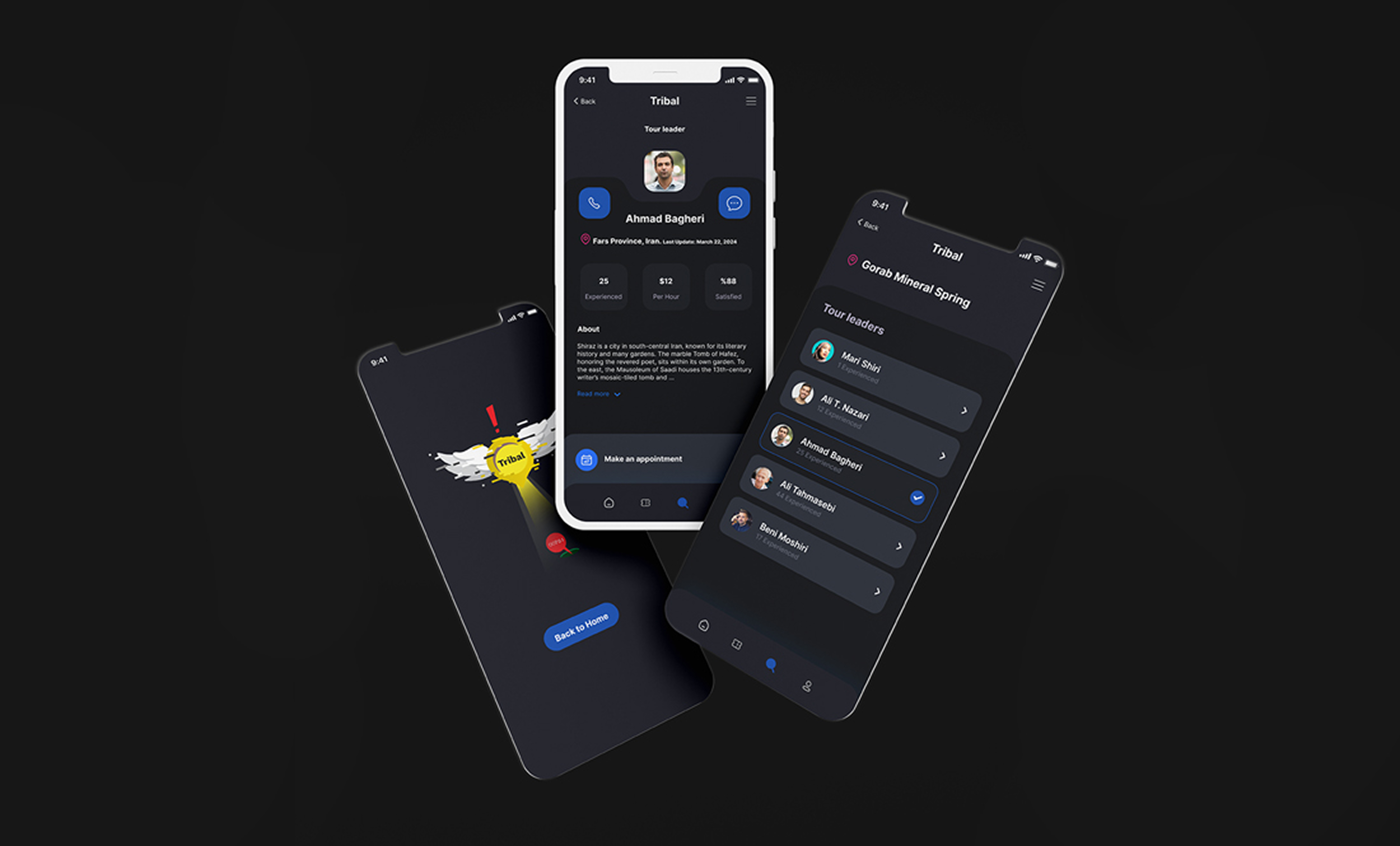
To further improve user accessibility, a menu featuring four icons was added to the bottom of the page. Lastly, the design of the intermediate pages was completed to ensure that navigation within the application is both optimized and user-friendly.
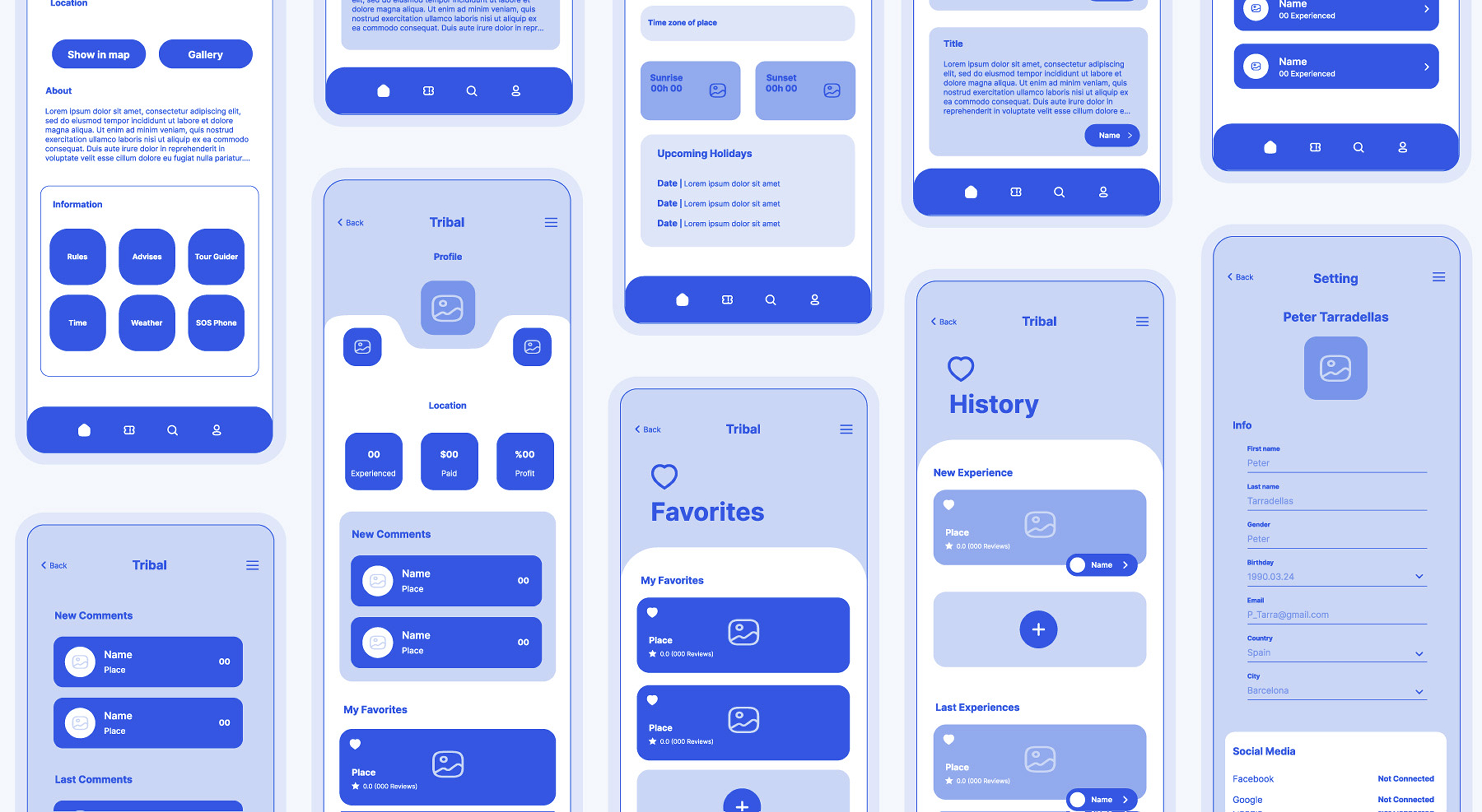
Wireframe
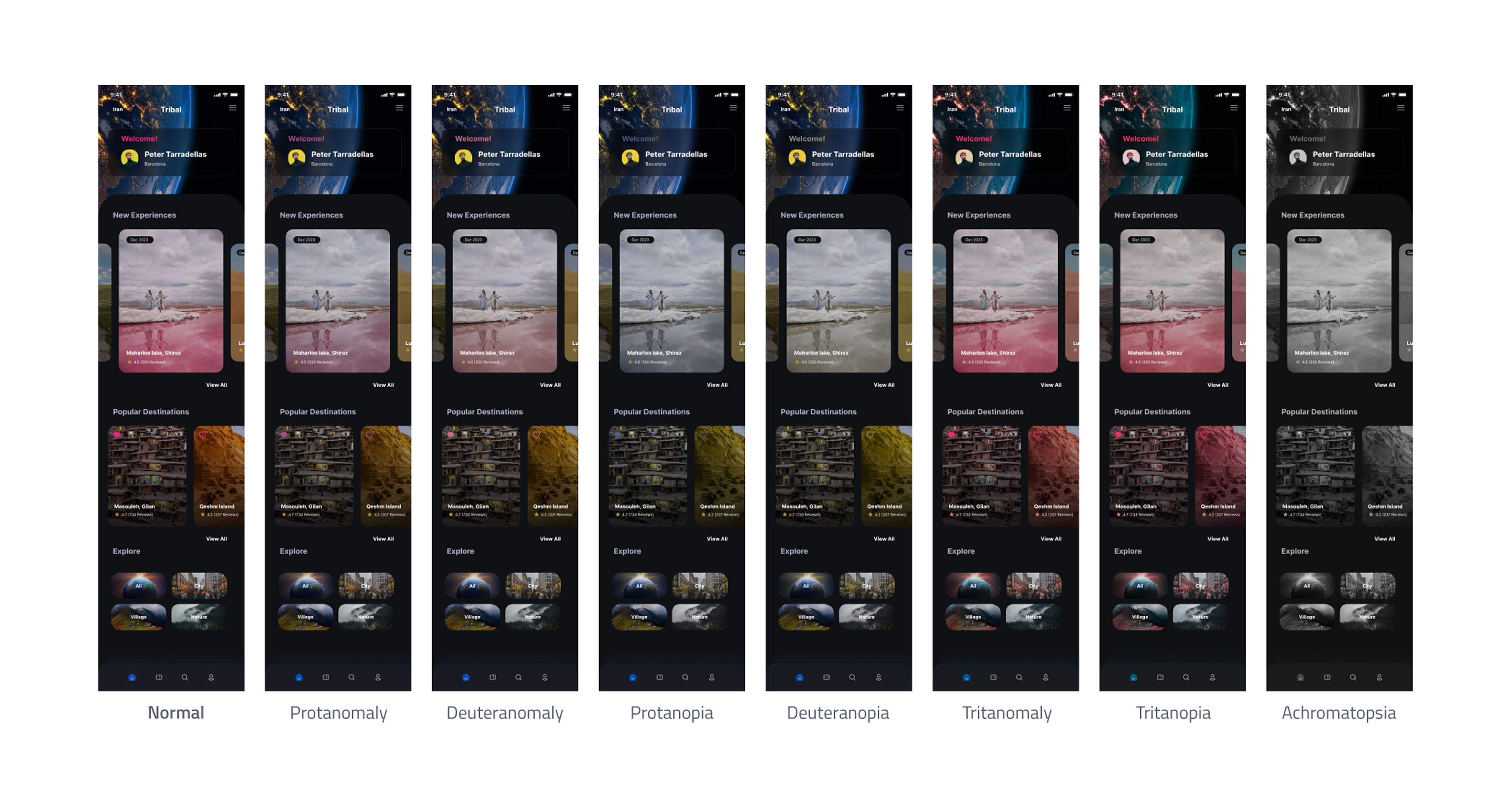
Color Blindness Test
Approximately 8% of men and 0.5% of women worldwide are affected by some form of color blindness. Conducting color blindness tests helps developers modify app designs so that all users, regardless of their visual abilities, can utilize them. By adhering to international standards such as WCAG (Web Content Accessibility Guidelines), applications can be made accessible to all users, including those with color blindness, thereby attracting a larger audience. For this reason, efforts have been made to use images and colors with appropriate contrast in page designs.
Examples of color blindness tests from the app pages, from left to right:
Examples of color blindness tests from the app pages, from left to right:
Social Impact
The app lets locals share knowledge and earn income, giving travelers authentic experiences and creating a virtuous loop where tourism revenue supports ongoing cultural and environmental conservation.
Sustainable Impact
By promoting eco-tourism, the app helps protect fragile ecosystems and living traditions, from northern forests to central deserts, that mass tourism can threaten.